In a nutshell
- 🐾 Omega‑3 (EPA+DHA) from marine sources reduces inflammatory eicosanoids and boosts pro‑resolving mediators, easing feline arthritis; cats convert plant ALA poorly, so fish or green‑lipped mussel works best for mobility and comfort.
- 📏 Vet‑backed dosing: aim for 40–60 mg/kg/day of combined EPA+DHA (generally cap at 100 mg/kg/day without supervision); dose by the label’s EPA+DHA, split with meals, add vitamin E, and avoid cod liver oil; consult a vet for anticoagulants, pancreatitis, or surgery.
- 🧪 Choose quality: prefer fresh, third‑party tested oils (triglyceride form often better accepted), refrigerate after opening; more isn’t always better—watch the omega‑6:omega‑3 ratio, potential stool softening, and added calories.
- 🧰 Multimodal plan: pair omega‑3s with weight management, ramps and grippy mats, gentle play, and complementary nutraceuticals; don’t alter pain meds without vet guidance; track jump height, grooming reach, stair time, and mood to gauge progress.
- 📈 Real‑world gains: improvements often appear by weeks 2–4, consolidating by 6–8; in a case study, Misty (13, Leeds) regained confident jumping on ~50 mg/kg/day EPA+DHA plus a small calorie trim and a ramp.
Stiff jumps, shortened strides, and a reluctance to use the stairs are hallmarks of feline arthritis that too many owners chalk up to “old age.” Yet emerging veterinary guidance suggests a simple nutritional tweak can help. Supplementing with omega‑3 fatty acids—notably EPA and DHA from marine oils—can reduce joint inflammation and ease movement in arthritic cats. UK clinicians now outline practical, safe dosing that owners can implement at home, provided they look past marketing labels and dose by active fatty acids. Done correctly, omega‑3 support often translates into quieter joints, smoother landings, and more confident play—without upending a cat’s routine or palate.
What Omega-3s Do in Arthritic Cats
Arthritis isn’t just worn cartilage; it’s biochemistry. In affected joints, cell membranes churn out inflammatory eicosanoids that amplify pain. Marine-derived EPA and DHA displace omega‑6 fats in those membranes, nudging the body to produce gentler mediators and pro‑resolving compounds such as resolvins and protectins. The result is a tangible shift: less heat and swelling in the joint capsule and a lower “volume knob” on discomfort. Cats, being obligate carnivores, respond particularly well to pre‑formed long‑chain omega‑3s from fish or green‑lipped mussel rather than plant sources like flax, which they convert poorly.
Owners rarely get fireworks on day one. The anti‑inflammatory “re‑plumbing” of cell membranes unfolds gradually as EPA and DHA accumulate. Many vets advise evaluating over one to two shed cycles of cartilage turnover. In practice, first hints of improved agility often appear by week two to four, with steadier mobility gains by week six to eight. Expect subtle wins before headlines: quieter landings from the windowsill, grooming the lower spine without grumbling, a longer stride across slick floors. Combined with weight control, the benefits compound—every gram of body fat shed lightens the load on tender joints and further reduces inflammatory signalling.
Vet-Backed Dosing: How Much EPA+DHA Is Safe for Cats?
Vets emphasise dosing by combined EPA+DHA (mg), not by total fish oil volume. A practical, conservative target for feline osteoarthritis is 40–60 mg/kg/day of EPA+DHA, adjusted to response and tolerance. Many clinicians cap unguided home dosing at 100 mg/kg/day. Always dose by the active omega‑3 content printed on the label—not the size of the capsule or pump. Start low for a week, then titrate to target to minimise tummy upsets, and use products with added vitamin E to limit oxidation.
| Cat Weight (kg) | Daily EPA+DHA Target (mg) | Practical Example |
|---|---|---|
| 3.0 | 120–180 | ~0.5–0.6 of a 300 mg EPA+DHA capsule (pierced) |
| 4.0 | 160–240 | ~0.6–0.8 of a 300 mg EPA+DHA capsule |
| 5.0 | 200–300 | ~0.7–1.0 of a 300 mg EPA+DHA capsule |
| 6.0 | 240–360 | ~0.8–1.2 of a 300 mg EPA+DHA capsule |
Label literacy matters. A “1000 mg fish oil” softgel commonly provides only ~300 mg EPA+DHA. If using a pump bottle, check the analysis per pump. Split doses with meals to reduce reflux. Avoid cod liver oil for daily use—its vitamins A and D can overshoot feline needs. If your cat is on anticoagulants, has a history of pancreatitis, or is scheduled for surgery, seek veterinary advice before supplementing. Monitor stools, appetite, and bodyweight; omega‑3s add calories that can sabotage weight-loss plans if not counted.
Choosing and Using Supplements: Form, Quality, and Safety
Not all oils are equal. Cats often accept liquid triglyceride‑form fish oil more readily than ethyl esters, and krill oil’s phospholipid form can be palatable but is pricier per mg of EPA+DHA. Look for third‑party testing (e.g., IFOS‑style certificates), batch freshness, and clear EPA/DHA disclosure. Freshness is non‑negotiable—rancid oils undermine benefits and may upset the gut. Store bottles in the fridge, cap tightly, and use within the indicated window once opened.
- Pros: Evidence‑based anti‑inflammatory effect; complements weight loss and gentle physiotherapy; easy to mix into food; generally well tolerated.
- Cons: Calorie dense; potential fishy breath; rare loose stools; theoretical effects on clotting at high doses; quality varies between brands.
Why “more” isn’t always better: excessive omega‑3 can soften stools, suppress platelets, and unbalance the omega‑6:omega‑3 ratio (healthy feline diets often sit around 5:1–10:1). Balance matters because cats still require arachidonic acid (an omega‑6) for normal physiology. Pair omega‑3s with a complete diet—ideally a veterinary joint formula that already contains fish oil—so you top up rather than reinvent the recipe. If using green‑lipped mussel, account for its EPA/DHA alongside other actives. When in doubt, take a photo of the label and ask your vet to calculate the real EPA+DHA dose.
Real-World Results: A Case Study and Multimodal Pairings
Meet Misty, a 13‑year‑old domestic shorthair from Leeds who’d stopped leaping to her favourite bay window. After baseline filming and a pain‑scoring checklist, her vet initiated 50 mg/kg/day of EPA+DHA (split twice daily) alongside a 12% calorie trim and a carpeted ramp. By week three, Misty resumed light play; by week seven, she reclaimed the windowsill with a quieter landing and fewer “misses.” Her owner’s notes—distance jumped, grooming reach, and night‑time restlessness—tracked steady, believable gains without changing her prescribed analgesic.
- Pairings That Help:
- Weight management (even 5–8% loss can ease joint load).
- Low‑impact play: food puzzles, gentle feather wands, warm‑up then short bursts.
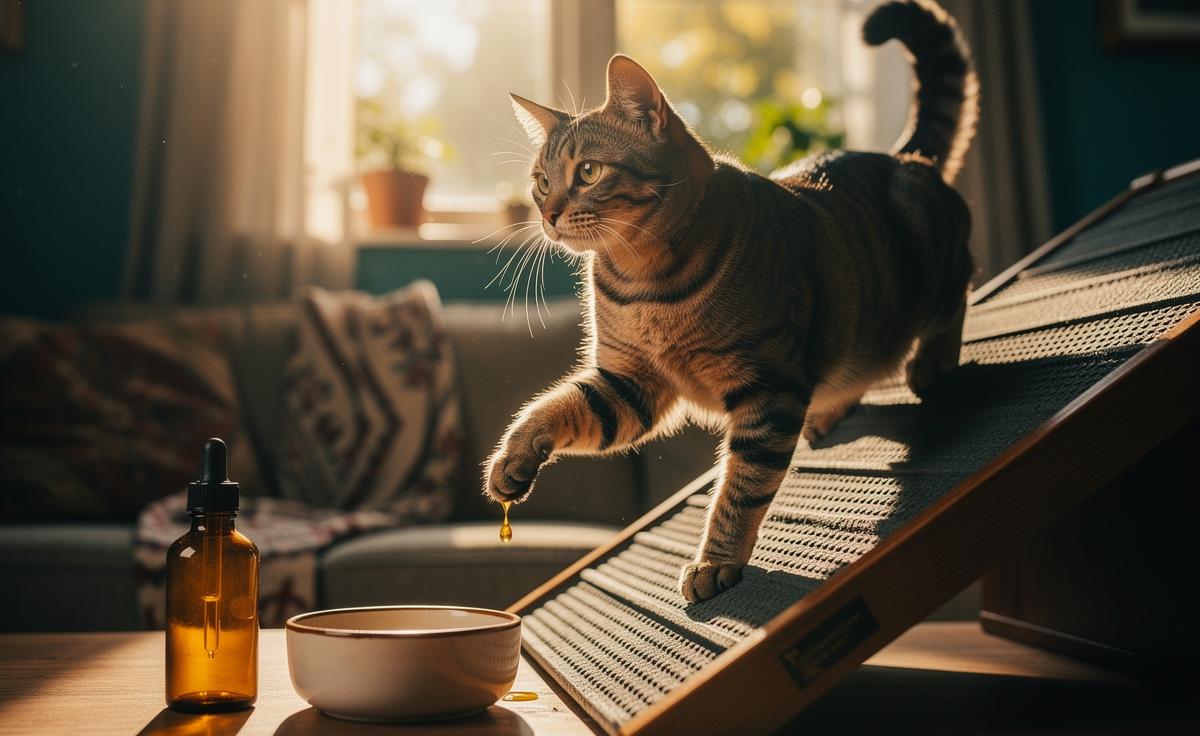
- Home tweaks: grippy mats, shallow‑step litter trays, ramps to favourite perches.
- Nutraceuticals: green‑lipped mussel and undenatured collagen have complementary mechanisms.
- Vet‑supervised analgesia: eg, meloxicam where appropriate, with kidney checks.
Track progress with quick weekly notes:
jump height achieved, grooming reach (can the cat clean the lower back?), stair time, and mood. Do not stop or reduce prescribed pain relief just because omega‑3s are added—any medication change should be vet‑led. If stools soften, reduce dose by 20% and split further across meals. For fussy eaters, start with a fingertip smear on a favourite treat and build up.
For arthritic cats, omega‑3s aren’t a miracle—just a well‑aimed nudge that makes movement less of a negotiation. When dosed by true EPA+DHA, checked for quality, and woven into a broader plan of weight control and home modifications, they often deliver quieter joints and brighter routines. The art is in patient titration and honest tracking, not in mega‑dosing. If your cat could benefit from smoother strides this season, what small, consistent step—dose check, label snapshot, new ramp—will you take this week to begin easing their every leap?
Did you like it?4.6/5 (28)