In a nutshell
- 🕰️ Monday fatigue often stems from social jetlag: weekend-induced circadian drift misaligns melatonin and cortisol, making a 60–90 minute shift feel like mini jet travel.
- 🍷📱 Common weekend habits—alcohol, late-night screens, heavy meals, and irregular workouts—delay the clock and compound into Monday brain fog and attention lapses.
- 😴 Catch-up sleep isn’t always better: while it restores some slow-wave sleep, it reduces Sunday sleep pressure, delays phase, and increases Monday sleep inertia—especially for late chronotypes.
- 🌞 Practical fixes: consistent wake time (within 60–90 minutes), morning light, caffeine cut-off, and an alcohol curfew; use short naps instead of long lie-ins plus a pre-bed wind-down.
- 📈 Real-world gains: a case study showed an 18% alertness boost after two weeks of timing tweaks—proving that better-timed sleep, not just more sleep, makes Mondays manageable.
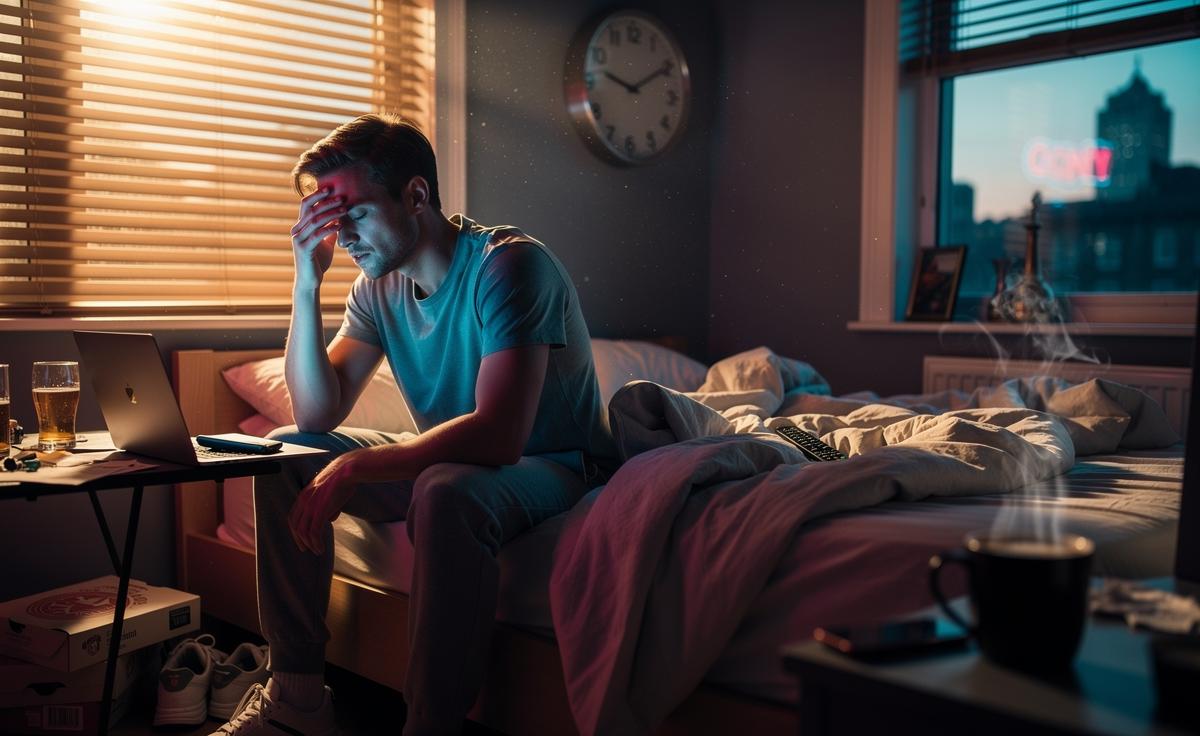
Monday fatigue feels like a paradox: we “rested,” yet we wake up foggy, irritable, and strangely behind. Sleep researchers have a name for this Monday malaise—social jetlag—the misalignment between our biological clocks and our weekend schedules. In the UK, surveys consistently find that roughly a third of adults struggle with sleep, and weekends often magnify the issue. Late nights, lie-ins, extra pints, and binge-watching disrupt the delicate choreography of circadian rhythm, melatonin, and cortisol. The result is a physiological “time-zone shift” without leaving the country. Below, we unpack why weekends can backfire, what the lab data suggests, and how small Sunday tactics can make Monday feel human again—without sacrificing your social life.
The Science of Social Jetlag and Circadian Drift
Our bodies keep time via a master clock in the brain’s suprachiasmatic nucleus, synchronised by morning light, regular meals, and activity. When weekends slide into late nights and late mornings, that clock delays. Shift it by even 60–90 minutes and Monday feels like you’ve flown east two time zones. Researchers track this using “mid-sleep on free days,” a proxy for social jetlag. Bigger shifts correlate with grogginess, lower mood, and reduced executive function on Mondays.
Physiologically, the drift scrambles the handover between adenosine (sleep pressure) and cortisol (the get-up-and-go hormone). You might extend total sleep at the weekend, but push REM into later morning hours, then compress it when you wake early on Monday—precisely the wrong direction. Add erratic light exposure—dim indoor evenings, bright screens at midnight—and melatonin timing moves later. What feels like freedom from the alarm is, to your brain, a new timetable it then has to abandon on Monday. Over months, that back-and-forth can increase sleepiness, impair glucose regulation, and nudge mood stability off-kilter.
Weekend Behaviours That Sabotage Sleep
Not all leisure is equal from a sleep perspective. The common culprits are familiar: alcohol (fragmented sleep, rebound wakefulness at 3 a.m.), heavy late meals (acid reflux, elevated body temperature), late-night screens (blue light delays melatonin), and irregular exercise timing (vigorous late sessions raise core temperature). In UK pub culture, a couple of late nights can easily push bedtime past 1 a.m.; add a Sunday lie-in, and your clock has shifted.
Consider how these habits translate into Monday:
| Weekend Habit | Short-Term Effect | Monday Consequence |
|---|---|---|
| Late drinking (2–4 units+) | Suppressed REM, frequent awakenings | Brain fog, low mood, REM rebound midweek |
| Sunday lie-in (2+ hours) | Circadian delay, reduced sleep pressure at night | Difficulty falling asleep Sunday, short sleep |
| Screen binge past midnight | Delayed melatonin, cognitive overstimulation | Sleep inertia, attention lapses |
| Late heavy meal | Thermoregulatory disruption, reflux | Fragmented sleep, early wake-ups |
The pattern is clear: small choices stack into a measurable circadian delay. Layer in stress (“Sunday scaries”) and the insomnia triangle appears—arousal, conditioned wakefulness in bed, and worry about not sleeping. The paradox is that the more you try to “bank” rest by sleeping in, the more you erode the very cues that make sleep automatic.
Why Catch-Up Sleep Isn’t Always Better
“I’ll pay it back at the weekend” sounds rational, but catch-up sleep is not a perfect repair kit. Yes, extending time in bed can reduce sleep debt, lower subjective sleepiness, and improve reaction time—temporarily. But prolonged lie-ins distort homeostatic pressure and shift the clock later, setting up a Sunday-night sleep squeeze. Studies suggest partial recovery of slow-wave sleep after deprivation, yet REM and circadian alignment often lag behind.
Pros vs. Cons of Catch-Up Sleep:
- Pros: Restores some deep sleep; reduces immediate sleepiness; may improve mood and immunity in the short term.
- Cons: Delays circadian phase; reduces sleep pressure for Sunday night; increases Monday sleep inertia; may perpetuate a weekly “yo-yo” that harms metabolic and cognitive stability.
There’s also a behavioural trap. A Saturday mega-lie-in feels productive, encouraging another late night, then a Sunday lie-in, and so on. People with later chronotypes (night owls) are especially vulnerable: they push later with little effort, but can’t easily advance on command. In short, more weekend sleep isn’t always better; better-timed weekend sleep usually is. The goal is alignment—consistent anchors that preserve the natural timing of melatonin and cortisol while still allowing for fun.
Practical Reset Strategies Backed by Research
Think “anchors, not shackles.” UK clinicians often recommend three anchors that preserve flexibility: a consistent wake time within 60–90 minutes of weekdays; morning light exposure; and a firm caffeine cut-off (about 8 hours before bed). Add a modest alcohol curfew—last drink 3–4 hours before sleep—and your Monday odds improve sharply.
Actionable tactics:
- Keep Saturday and Sunday wake-up within 60–90 minutes of weekday timing; use a 20–30 minute afternoon nap if needed instead of a long lie-in.
- Get 20–30 minutes of outdoor light before 10 a.m.; in winter, consider a 10,000 lux light box on dark mornings.
- Front-load socialising or meals earlier; choose lower-alcohol options and alternate with water.
- Replace doomscrolling with a 30-minute wind-down (paper book, warm shower, breathwork).
- Eat the heaviest meal at least 3 hours before bed; keep late snacks light and bland.
Case study: Emma, 34, a Manchester product manager, used to sleep at 2 a.m. weekends and wake at 11. She shifted to a 9 a.m. wake-up both days, took a 20-minute nap at 3 p.m. Saturday, stopped caffeine after 2 p.m., and scheduled a Sunday evening wind-down at 9:30 p.m. Within two weeks, her Monday headaches vanished and her alertness scores (via a simple reaction-time app) improved by 18%. The point isn’t perfection; it’s a repeatable Sunday ritual that cues your clock to land on time.
Weekends should restore, not raid, your alertness budget. By understanding social jetlag and targeting the handful of habits that drift your clock—late alcohol, screen glare, long lie-ins—you can keep the joy of Fridays without paying for it on Mondays. The smartest move isn’t sleeping more at the weekend; it’s sleeping more on time. If you tried one change next weekend—earlier light, a steadier wake-up, or a stricter caffeine window—which would it be, and how would you measure whether Monday truly feels different?
Did you like it?4.4/5 (22)