In a nutshell
- 🔔 Vivid recall hinges on brief micro-awakenings—benign arousal windows that let the brain stamp dream content into memory, seen more often in high recallers.
- 🧠 Heightened reactivity in the temporoparietal junction (TPJ) and medial prefrontal cortex supports attention to internal cues, aiding recall without equating to disruptive, fragmented sleep.
- 😴 During REM, low noradrenaline and boosted acetylcholine/dopamine foster imagery; emotionally charged scenes (via the amygdala–hippocampus loop) stick better—though chronic stress can still impair sleep architecture.
- 📝 Daytime traits—openness, absorption, and a storytelling bent tied to the default mode network (DMN)—plus habits like a stillness pause and immediate journaling markedly improve recall (as in Amira’s case study).
- ⚖️ Why vivid recall isn’t always better: Pros vs Cons include creativity and insight versus potential fatigue; practical nudges (notebook, gentle REM-timed alarms, tagging emotion first) help—while sleep quality must come first.
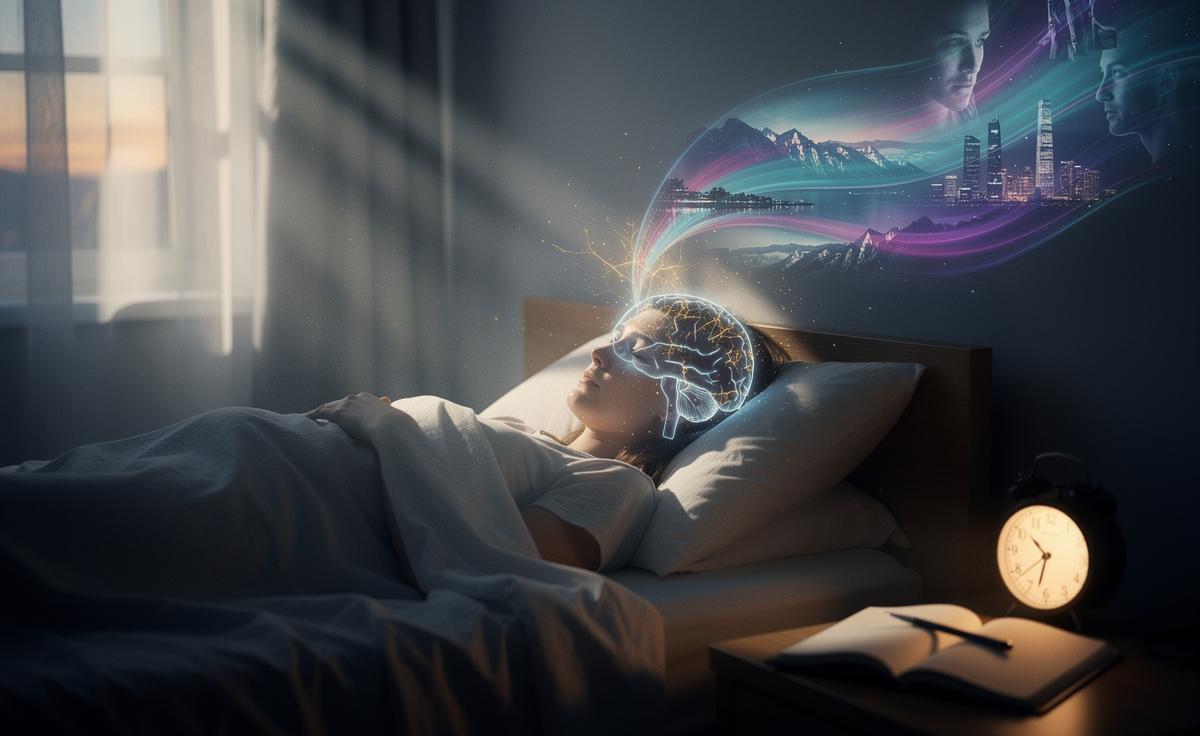
Why do some mornings arrive with a Technicolor rerun of the night, while others dissolve into fog within seconds? British sleep labs and European neuroscience groups now converge on a counterintuitive answer: it’s not simply how intensely you dream that matters, but how often your brain peeks back into wakefulness. Those fleeting “micro-awakenings” act like timestamps, letting the mind file away a storyline before it fades. At the same time, individual differences in attention networks, emotion-processing, and sleep routines nudge recall up or down. In essence, dream memory is a partnership between the chemistry of REM sleep and the mechanics of waking attention.
The Brain’s Arousal Windows: Micro-Awakenings That Seal Dreams Into Memory
When experts talk about vivid dream recall, they often point to a deceptively simple mechanism: arousal windows. In people who remember dreams well, the brain briefly shifts towards wakefulness more often during the night, especially around REM phases. These micro-awakenings, typically too short to register as “being awake”, allow the hippocampus and language areas to convert slippery imagery into retrievable memory traces. Teams at the Lyon Neuroscience Research Center, led by Perrine Ruby, have shown that high dream recallers exhibit stronger activity in the temporoparietal junction (TPJ) and medial prefrontal cortex in response to subtle sounds and tend to spend more cumulative time awake overnight. It’s the momentary lift into awareness—not just the dream—that locks the narrative in.
Think of it this way: dreaming is a creative workshop; arousal is the archivist who labels the canvases before they’re stacked away. Without the archivist, the art exists—but you won’t find it by morning. Notably, these arousal windows are not the same as broken sleep. In healthy sleepers, they’re brief, benign, and often adaptive, coinciding with REM’s bursts of imagery and emotion when memories are most likely to be captured.
| Factor | What Experts Observe | Effect on Recall |
|---|---|---|
| Micro-awakenings | More frequent, slightly longer in high recallers | Increases |
| TPJ/Medial PFC reactivity | Heightened response to stimuli during sleep | Increases |
| Fragmented, disruptive awakenings | Stress-induced, prolonged wake periods | Decreases or distorts |
REM, Emotion, and Neurochemistry: Why Feeling Fuels Remembering
REM sleep is a neurochemical outlier: noradrenaline dips, acetylcholine surges, and dopamine activity pulses in ways that enhance imaginative synthesis while easing the sharp edge of waking anxiety. In this milieu, the amygdala chats with the hippocampus, stamping emotional tone onto dream scenes. Emotion is mnemonic glue; as with daytime memories, the more emotionally salient a dream segment, the more likely it survives the dawn. That’s why people in high-stress or high-change periods often report cinematic narratives: the brain is rehearsing, reframing, and filing significance under dimmed noradrenergic “noise”.
But why does this help some people more than others? Individuals vary in baseline arousal and attention to internal cues. Those who naturally notice bodily states—heartbeat, breath, tension—often also “notice” dreams. Meanwhile, if REM arrives close to your habitual wake time (a common weekend pattern), that proximity to daylight consciousness can lift details into speech-ready memory. A cautionary note: strong emotion isn’t a free pass to perfect recall. Without those brief arousals—and a waking brain ready to label the scene—even striking dreams evaporate. Conversely, sustained anxiety can disrupt sleep architecture, curbing the very REM stability that enriches memory.
Personality, Attention, and Mind-Wandering: The Daytime Traits That Predict Night-Time Recall
Beyond the bedroom, characteristics such as openness to experience, absorption (the tendency to become immersed in music, film, or reading), and reflective mind-wandering correlate with clearer dream memories. These traits map onto the default mode network (DMN), which knits personal meaning between scenes and helps “story-ify” experience. People who journal, sketch, or narrate their day also tend to narrate the night: their cognitive style is primed for retrieval. The more you habitually translate experience into words or images, the more likely your dreams find a foothold in waking thought.
A London product designer, Amira, noticed she recalled nothing unless she lingered in bed. She began keeping a notebook on the duvet, staying still for fifteen seconds on waking, then jotting any fragment—colour, dialogue, setting. Within two weeks, her recall jumped from zero to several entries per week. That pause likely harnessed a micro-arousal and prevented interference from phone notifications and daylight plans. Crucially, she learned to write before analysing; editorial brain gets in the way of retrieval brain, and timing is everything when memory traces are fragile.
Why Vivid Recall Isn’t Always Better: Pros vs Cons and Practical Nudges
Greater dream recall can be creatively enriching—but not universally beneficial. Pros include richer self-insight, rehearsal of coping strategies, and problem-solving leaps (engineers and artists often mine dreams for breakthroughs). Cons arise when vivid nightmares or late-night rumination slice into rest. Chasing recall at the expense of sleep quality can backfire, dulling attention and mood the next day. Consider a “light-touch” approach that favours sleep first, recall second.
- Pros: Emotional processing, creativity, autobiographical meaning, therapy insights.
- Cons: Nightmares, sleep fragmentation, morning grogginess, over-interpretation.
Practical nudges grounded in expert advice:
- Place a notebook within reach; write before screens to catch the fragile trace.
- Adopt a brief stillness window on waking; revisit the last scene and work backwards.
- Anchor cues: a gentle alarm near an expected REM-rich window (final sleep cycle) can create a benign arousal.
- Tag emotion first (“anticipation”, “fear”, “awe”)—then plot; emotion often hooks memory.
- Protect sleep: if recall practices raise fatigue, scale back. Sleep quality outranks volume of entries.
Ultimately, the “surprising reason” vivid dreamers remember more is the dance between REM’s imaginative chemistry and well-timed micro-awakenings that let the waking brain stamp and store the story. Personality and habits tilt the floor further, making some of us natural archivists of the night. The trick is to leverage this without turning rest into a project. If you tried a week of gentle changes—a notebook, a 15-second pause, a later alarm—what patterns might your sleeping mind finally reveal?
Did you like it?4.5/5 (20)