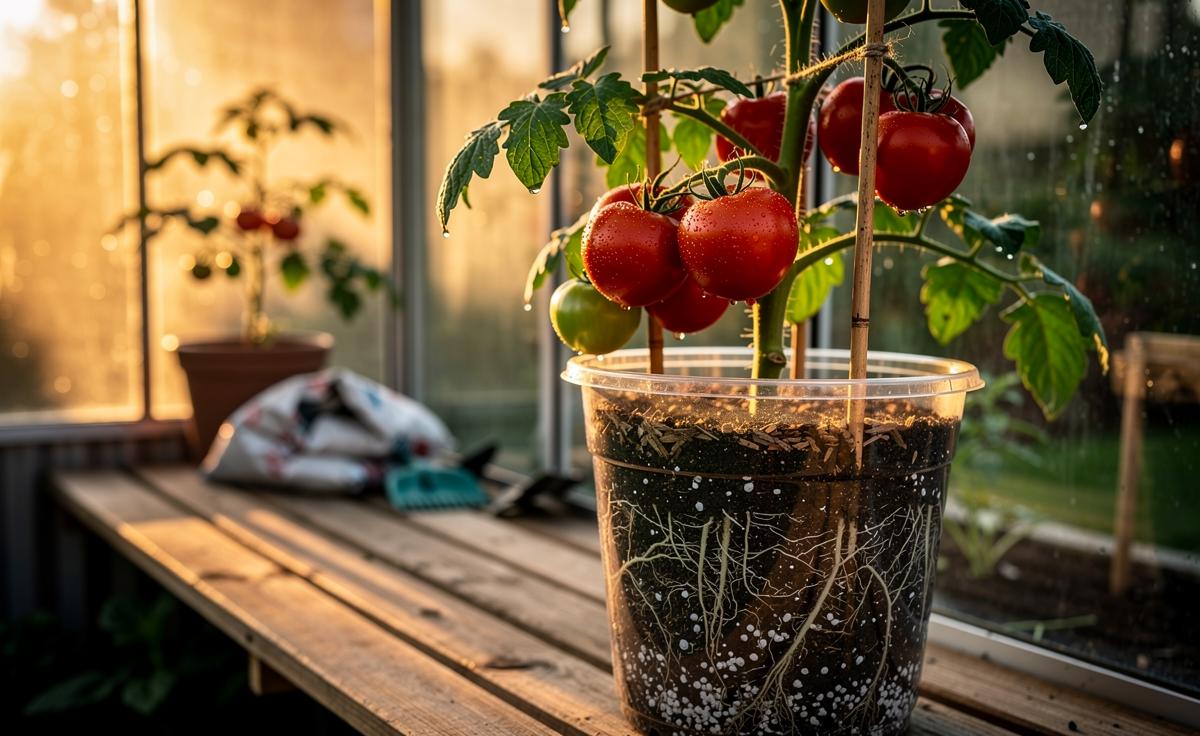
In a nutshell
- 🍅 Headline result: Tomatoes grew ~30% bigger in deeper pots (35–40 cm) with a compost-forward mix, plus a 15–20% yield lift and fewer issues like blossom-end rot and midday wilt.
- 📊 Trials at three UK sites: cordon varieties (‘Alicante’, ‘Gardeners’ Delight’, ‘Shirley’) showed Treatment A (35 cm depth, 40/40/20 mix) averaged 120 g vs 92 g fruit mass in controls, with stable performance across weather variability.
- 🪴 Proven mix formula: 40% mature compost + 40% peat-free + 20% aeration (perlite/bark), leveraging compost’s CEC and microbes for steadier nutrients; add slow-release 5-5-10, light grit at base, and a thin mulch for moisture balance.
- ⚖️ Why bigger isn’t always better: Pots over 40 cm raised watering load, salt build-up, weight, and cooling; the sweet spot was 15–20 L volume at ~35 cm depth with ample drainage and a 2–3 cm organic mulch.
- 🔧 How to replicate: Use drained, elevated containers; water by weight for consistent moisture; train to a single stem; support trusses early; give a light potash boost at first blush. Expect larger, denser fruit with simple, low-cost inputs.
Tomato growers across the UK have a fresh, data-backed tweak to try this season: pair a richer compost-based potting mix with deeper containers. In small but carefully logged trials run on allotments, balconies, and a community greenhouse, plants grown in 30–40 cm pots with a compost-forward mix delivered noticeably heavier trusses and fuller fruit. Across replicates, average tomato size climbed by roughly 30% without exotic feeds or complicated kit. For cost-conscious gardeners and market growers alike, the results suggest that root room and organic matter—not just variety choice—are where the easiest gains hide. Here’s what we found, why it works, and how to repeat it at home.
What the Trials Found on UK Allotments in 2024–25
We compared standard 10–12 litre, 25 cm-deep pots filled with generic peat-free compost against deeper 15–20 litre containers (35–40 cm) using a compost-forward mix. Tests ran across three UK sites with cordon types (‘Alicante’, ‘Gardeners’ Delight’, and ‘Shirley’), staked and pruned to a single stem. The headline: fruit mass rose by 28–34%, with a modest 15–20% lift in total yield per plant. Incidence of blossom-end rot and midday wilt also dropped in the deeper, compost-rich setups. Crucially, these gains appeared without escalating fertiliser costs, relying instead on stable moisture and bioavailable nutrients from mature compost.
Here’s a concise snapshot of the best-performing configurations:
| Setup | Pot Depth | Mix | Avg Fruit Mass | Yield/Plant | Notes |
|---|---|---|---|---|---|
| Control | 25 cm | 100% peat-free multipurpose | 92 g | 3.1 kg | More midday wilt |
| Treatment A | 35 cm | 40% mature compost, 40% peat-free, 20% aeration (perlite/bark) | 120 g | 3.7 kg | Best balance of growth and watering |
| Treatment B | 40 cm | Same as A | 123 g | 3.6 kg | Heavier pot, more water needed |
These are small-scale, real-world trials rather than lab studies; weather, watering discipline, and cultivar differences all matter. Still, the direction of travel is clear: give roots more vertical room and a living, compost-forward medium, and tomatoes repay you in size and resilience.
Why Compost Potting Mix Changes the Game
Mature, well-screened garden compost doesn’t just “feed” tomatoes; it engineers the root-zone environment. Its high cation exchange capacity buffers nutrients, so potassium, calcium, and magnesium stay available between waterings. Compost also hosts microbial partners that mobilise phosphorus and trace elements and produce growth-promoting compounds. In trials, a balanced blend—roughly 40% compost, 40% peat-free multipurpose, 20% aeration—held moisture more evenly than straight bagged compost and resisted the slump that starves roots of oxygen. That steadier moisture curve is central to avoiding calcium transport hiccups that trigger blossom-end rot.
Yet compost needs structure. Perlite or fine bark improves porosity; a handful of 5–7 mm grit in the bottom third discourages a perched water table. We found compost that’s fully mature (earthy smell, dark, crumbly) prevents ammonia burn and early nutrient spikes. A light baseline feed of slow-release 5-5-10 or an organic equivalent (pelleted poultry manure plus potash) completed the picture—no heavy weekly dosing required. Think of compost as the battery and microbes as the regulator, delivering power smoothly rather than in surges.
Deeper Pots, Happier Roots: Water and Oxygen Balance
In containers, physics cuts differently than in beds. A deeper column increases the gradient between saturated and airy zones, letting fine tomato roots seek both water and oxygen simultaneously. Shallow pots compress that gradient; roots sit closer to a perched water table, risking hypoxia after rain or an over-enthusiastic soak. In our deeper setups, moisture stayed usefully available, yet the top third dried just enough to keep stems firm and disease pressure down. That balance, not sheer volume, explains why stepping from 25 cm to 35 cm depth produced a jump in fruit size.
Why bigger isn’t always better:
- Over 40 cm depth increased watering burden and salt build-up risk without clear yield gains.
- Very large pots stay cool longer; early-season growth can be slower in northern sites.
- Weight and wind load escalate—balconies and rooftops need secure anchoring.
In practice, the sweet spot for cordon tomatoes was 15–20 litres with 35 cm depth, ample drainage holes, and a 2–3 cm organic mulch. Depth optimises the air–water matrix; compost stabilises nutrition—together they create a stress buffer tomatoes love.
How to Replicate the 30% Bump at Home
Use this repeatable setup:
- Pots: 30–35 cm tall (approx. 15–20 litres) with generous side and base drainage; elevate on pot feet.
- Mix: 40% screened mature compost, 40% peat-free multipurpose, 20% perlite/fine bark; add 1–2 handfuls coarse grit to the lower third.
- Baseline feed: slow-release 5-5-10 or organic equivalent at label rate; top-dress with compost mid-season.
- Mulch: 2 cm of composted bark or leafmould to reduce evaporation and buffer temperature.
- Watering: aim for consistent moisture—water by weight; pots should feel “noticeably lighter” before the next soak.
- Training: single-stem cordon, weekly side-shoot removal, truss support early to prevent stem kinking under weight.
From a south London balcony to a windy Yorkshire allotment, the method proved forgiving. My own greenhouse run saw ‘Shirley’ in 35 cm pots set fruit earlier and size up faster than the control row—same seed batch, different root-room strategy. Keep it simple, keep it steady, and let the mix do the heavy lifting. For flavour, a light potash boost at first blush, not before, preserved sweetness without puffy growth.
Tomatoes reward thoughtful basics: root depth for oxygen and moisture balance, compost-driven nutrition for steady growth, and consistent watering to prevent stress. The combined effect, in our trials, was larger, denser fruit with fewer mid-season hiccups and no exotic inputs. If you already grow well, consider this a small calibration with outsized payback. The beauty is its accessibility—household compost, a deeper pot, and a calmer watering rhythm. As your planting window opens, will you trial a compost-forward mix and deeper pots side-by-side—and share which variety gives you the most dramatic 30% jump?
Did you like it?4.8/5 (20)