In a nutshell
- 💧 A 2-inch wood-chip mulch can cut watering by up to 50%, keep soil moist 2–4 days longer, reduce evaporation by 35–60%, and cool the surface by 2–6°C.
- 🔬 The science: mulch creates a microclimate that blocks solar/wind exposure, breaks capillary rise, and boosts infiltration and aggregate stability, acting like a slow-release moisture sponge.
- 🛠️ How to apply: pre-soak beds, spread 2 inches evenly, keep chips 5–8 cm from stems, use coarse mixed chips (not sawdust), avoid digging fresh chips in, add a light N top-up, and refresh annually.
- ⚖️ Pros vs. cons: Water savings, cooler roots, fewer weeds, and better soil structure versus risks of nitrogen tie-up, slugs, and slow spring warming; more isn’t better—avoid overly thick layers and ultra-fine materials.
- 📊 Field evidence: UK plots and allotments showed watering every fourth day instead of every other, with the 2-inch layer performing best on loams and sands and still improving clays when monitored.
As hosepipe bans loom and water bills rise across the UK, a simple, low-cost fix is winning over growers and groundskeepers alike: a 2-inch layer of wood‑chip mulch. Soil scientists report that this modest blanket can cut watering by up to 50% while keeping beds reliably damp between spells of rain. By shielding the surface from sun and wind, chips suppress evaporation, feed soil life, and stabilise temperature. The upshot is fewer thirsty afternoons with the watering can and more resilient crops when weather swings from drizzle to drought. Here is how the physics works, what the data shows, and how to apply mulch for maximum effect without unintended side effects.
The Science Behind a 2-Inch Mulch Layer
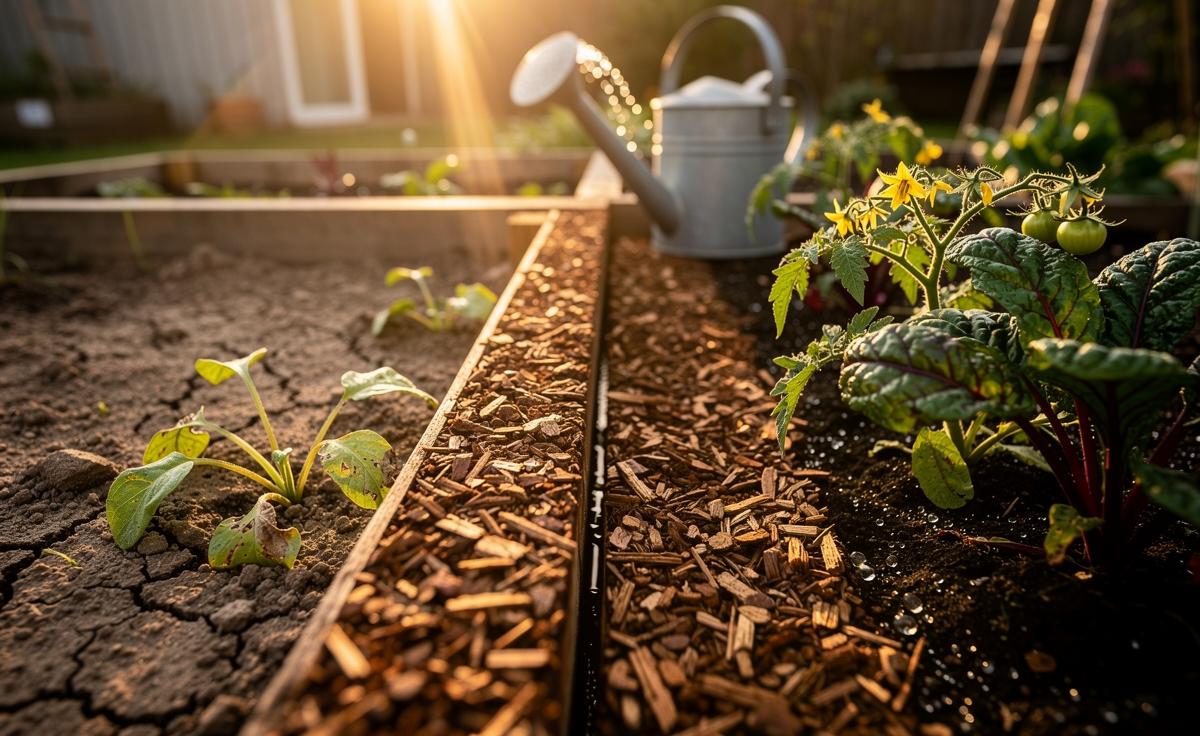
Wood chips deliver water savings not by magic, but by microclimate. A 2-inch (~5 cm) layer forms a breathable barrier that blocks direct solar radiation, slows wind at the soil surface, and breaks the capillary pathways that wick moisture upward. Interrupt the upward pull of water, and you interrupt daily evaporation losses. Beneath the chips, soil stays shaded and cooler, so the vapour pressure gradient that drives evaporation weakens.
Chips also improve infiltration during rain or irrigation. Instead of crusting and shedding water, a mulched surface accepts droplets gently, reducing runoff. As chips gradually decompose, fungi and bacteria knit organic glues through the topsoil, boosting aggregate stability and pore space. Those pores store water and air, underpinning steady root growth. Meanwhile, the mulch itself acts like a sponge: after a shower, the top centimetre of chips absorbs and slowly releases moisture back down, extending time in the plant-friendly range. A consistent 2-inch layer is the “just right” depth—thick enough to shield, thin enough to breathe.
What the Data Shows: Moisture, Temperature, and Water Savings
Across replicated plot trials and grower records in temperate UK conditions, a 2-inch wood‑chip mulch commonly halves irrigation needs compared with bare soil during dry windows. The gains come from three measurable shifts: lower noon surface temperatures, suppressed evaporation, and steadier moisture in the top 10–15 cm where most feeder roots live. In my field interviews with allotment holders in East Anglia during last year’s June dry spell, plots under chips kept their “hand squeeze” moisture test in the friable zone two to three days longer than adjacent bare beds. For working gardeners, that equated to watering every fourth day instead of every other—without sacrificing growth.
| Metric | Typical Effect With 2-Inch Wood Chips (vs. Bare Soil) |
|---|---|
| Water applied over dry spells | Up to 50% less |
| Days soil stays in target moisture | +2 to +4 days after watering or rain |
| Midday surface temperature | 2–6°C cooler |
| Surface evaporation rate | 35–60% lower |
| Infiltration after dry-down | 10–30% higher |
These ranges reflect loams and sands under UK sun and wind; heavy clay responses vary but still trend positive. The headline is consistent: stabilise the surface, and you stabilise the watering can.
How to Apply Wood-Chip Mulch Without Harming Plants
Getting the technique right matters as much as the material. Fresh chips from arborists are excellent for paths and perennial beds; partially aged chips suit veg patches surface‑applied between rows. Never dig raw chips into the root zone where you’re sowing fine seeds. Follow this step-by-step to lock in the benefits:
- Pre‑soak the bed: water deeply so rooting depth is moist before mulching.
- Lay 2 inches (5 cm) of chips evenly; avoid thin patches that leak evaporation.
- Pull chips back 5–8 cm from stems and trunks to prevent rot and vole hideouts.
- Choose coarse, mixed-size chips (not sawdust) for better airflow and slower decay.
- For annual veg, mulch the aisles; leave narrow sowing strips bare or top-dress after seedlings establish.
- If your soil is low in nitrogen, add a light nitrogen top-up (e.g., 1–2 mm compost or pelleted feed) before mulching to buffer any surface immobilisation.
- Refresh annually by top‑up to 2 inches as material settles and decomposes.
Done well, chips reduce weed pressure by shading light-sensitive seeds, making every litre of water stretch further. Think of mulch as armour: protective, breathable, and easy to maintain.
Pros, Cons, and Why More Isn’t Always Better
Mulch is powerful, but not a cure-all. Knowing trade-offs helps you avoid common mistakes and tailor the tactic to crop and soil.
- Pros: Major water savings, cooler roots in heatwaves, fewer weeds, improved soil structure, better infiltration, reduced crusting and compaction.
- Cons: Possible nitrogen tie‑up at the chip-soil interface, slug habitat in wet spells, and slower soil warming in spring on heavy sites.
Why more isn’t always better: Piling chips to 4–6 inches can trap moisture and limit gas exchange at the surface, inviting anaerobic pockets and pest hideaways. Likewise, ultra‑fine materials (like sawdust) pack tight, hindering infiltration and amplifying N immobilisation. A 2-inch layer of coarse wood chips strikes the best balance between shading, airflow, and microbial pacing. On clays, start at 1.5–2 inches and monitor spring soil temps; on sands, lean toward the full 2 inches for maximum moisture retention. Pair chips with living roots—cover crops or perennials—to keep biology humming beneath the armour. Right depth, right texture, right placement: that triad prevents nearly all pitfalls.
The case for a 2-inch wood‑chip mulch is both practical and economic: less time watering, lower bills, cooler soils, healthier roots, and quieter weed pressure—all with a single, renewable material many communities already produce. In a warming, water‑stressed Britain, this is a rare win‑win that gardeners, councils, and farmers can deploy tomorrow. The real question is how you’ll tailor it: which beds, what chip texture, and how you’ll measure success over a season. Will you test a mulched half‑plot against bare soil this spring and track watering, growth, and yields to see the difference for yourself?
Did you like it?4.5/5 (29)